Before the Plaque: How Places Remember Without a Monument
How places remember without a monument: trace the gatherings and shared rituals that carry local memory, while making room for newcomers and change.
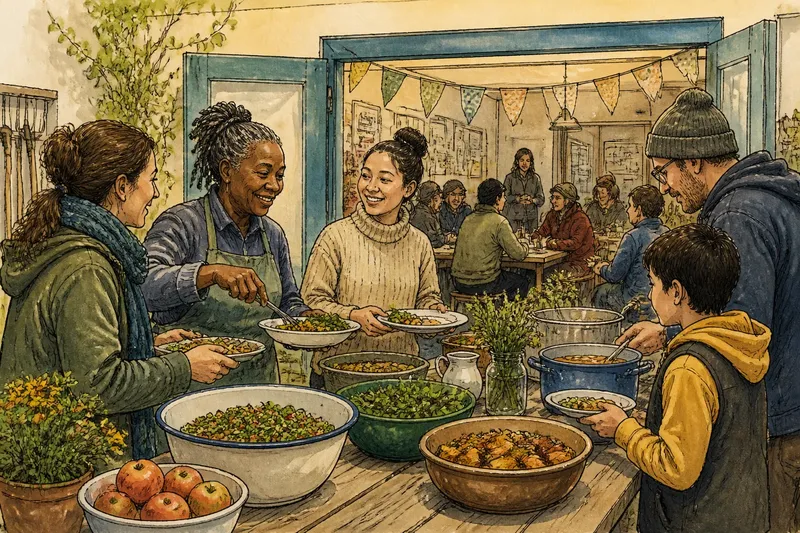
How places remember without a monument is easiest to see in a repeated act: neighbors bring a meal to the community center each year and leave room for people who were not there before. The memory lives not in a marker but in the gathering, the familiar gestures, and the choice to return. Everyday customs can carry local history while leaving space for it to change.
A shared meal, a seasonal cleanup, or a yearly gathering may connect a place’s past to what residents need now. The practice itself matters, but so do the people who sustain it, the people it welcomes, and the limits they set on what gets shared.
How places remember without a monument through recurring customs
Start with practices people repeat, rather than trying to collect every story about a neighborhood. Look for a gathering tied to a season, a meal held after a community activity, or a familiar gesture that marks a moment of remembrance. Ask participants what the custom means to them today; different answers can reveal how memory is carried without requiring a single official account.
Notice who organizes the activity, who is invited, and who does the work. A custom may be cherished by some residents and uncomfortable for others. Treating it as a living practice means listening when people want to adapt it, pause it, or make it more welcoming.
Listen to stories without turning them into a single account
People may remember the same gathering or event differently. One person may recall a difficult loss, while another remembers the friendships that formed afterward. Keep those recollections distinct instead of smoothing them into one definitive narrative.
Ask before recording or sharing someone’s account. If people agree to contribute, clarify who will keep the notes, where they might appear, and how contributors can request a correction or removal. Some memories belong in conversation rather than in a public record.
Imagine a neighborhood center hosts an annual meal after a garden cleanup. One resident remembers the garden as a place to meet neighbors; another recalls that some residents were left out of its early gatherings. The organizers could invite both people to describe what they want the meal to acknowledge, then add an open invitation and a short moment for reflection. The observable result would be a gathering that makes room for both memories without presenting either as the only version.
Choose a modest way to carry a memory forward
A community can preserve a custom through a story hour, a shared collection of short recollections, or a gathering where people may contribute if they wish. Keep participation simple: people should not need polished writing, special equipment, or detailed knowledge to take part. Make clear that the record represents contributions, not everyone in the neighborhood.
Think of a shared memory as a recipe card passed among relatives: each person may add a note, but the card is not the meal and does not contain every family member’s experience. A small record can help a story travel without pretending to be complete. If no one wants a written record, continuing the gathering may be enough.
- Check whether participants want the custom recorded; if they agree, decide together what can be written down, and if they do not, keep the practice conversational.
- Check who will hold any notes; if a willing custodian is identified, name that person’s role, and if no one volunteers, do not collect material that needs ongoing care.
- Check where contributors permit their words to appear; if they approve a specific setting, share only there, and if permission is unclear, keep the words private.
- Check whether contributors can review their words; if they can, offer a chance to correct them, and if they cannot, avoid presenting the notes as a public account.
- Check whether anyone wants a contribution removed; if they do, follow the agreed removal process, and if no process exists, pause sharing until one is set.
- Check whether newcomers can understand how to join; if the invitation explains the custom and its purpose, share it, and if it does not, revise it before inviting more people.
What should neighbors ask before sharing a remembrance?
Can a custom change and still carry the same memory?
Yes. A gathering may change its format or welcome new participants while retaining the meaning people value. Ask those involved which parts matter and which can change.
How can newcomers take part respectfully?
Offer a clear invitation that explains the gathering’s purpose and leaves room to listen before contributing. New participants can ask what is welcome rather than assuming attendance gives them authority to speak for others.
What should organizers do when memories differ?
Present recollections as individual accounts and let people describe what they remember without forcing agreement. If the disagreement involves harm or exclusion, ask affected residents whether and how they want those accounts shared.
Does remembering without a monument rule out a public marker?
No. Residents may choose a plaque or another formal marker alongside everyday customs, or decide that a recurring practice is the form they want. Let the community determine what recognition means and who should take part in that decision.
Keep the custom useful to the people who sustain it
Return to the gathering or practice and ask whether participants still want to continue it, who is tending it, and what would make it easier to join. The answer may be to keep the custom as it is, adjust the invitation, or let it rest. Any written account should stay proportionate to what people have offered.
How places remember without a monument depends on people making room for one another through repeated, ordinary choices. Before preserving a custom for the future, ask the people who carry it what they want newcomers to understand—and what they would rather keep within the gathering.